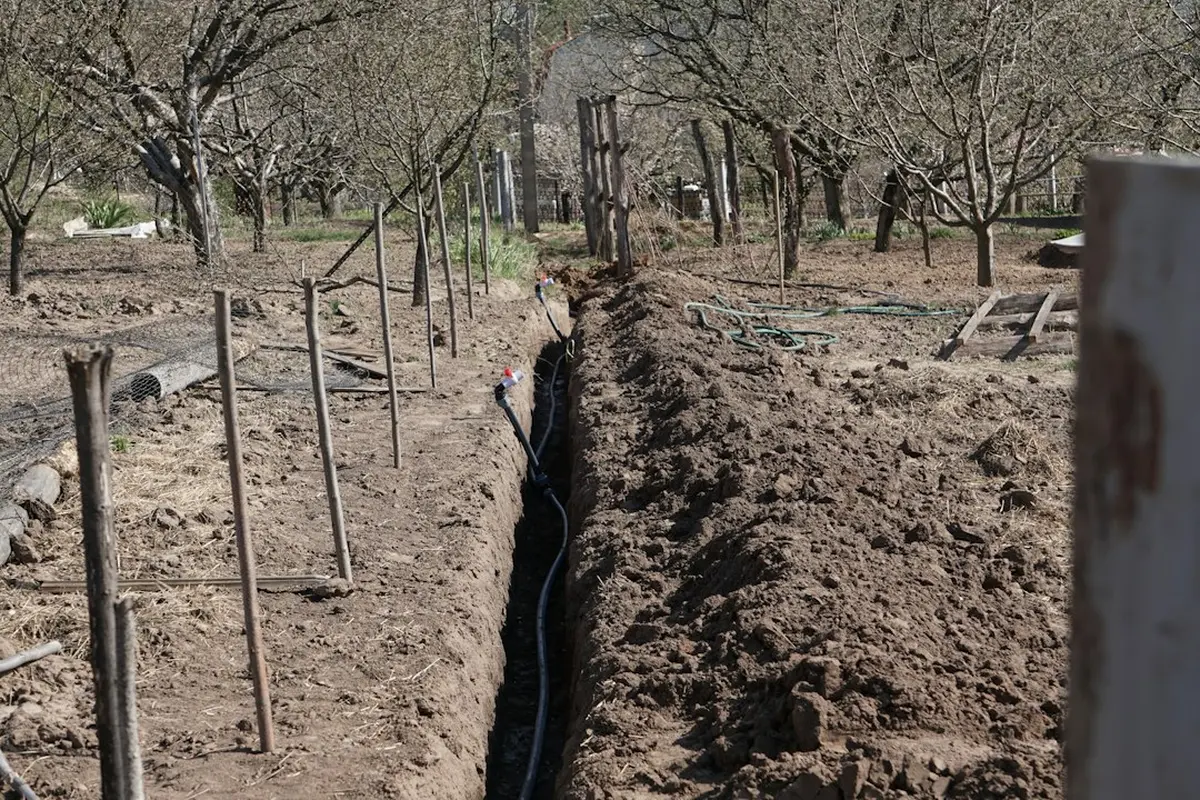
The question in every September garden email this week is whether it is worth putting seed in dry ground at all. The calendar says seed cover crops, plant garlic, mulch the empty beds. The soil says otherwise.
The cleanest answer comes from Penn State Extension agronomist Sjoerd Duiker, writing about cover crops in a dry fall: plant now only if precipitation is expected within the next few days. If it is not, wait for rain rather than risk a failed stand. A cover crop that sprouts on a half inch of dew and then dies has cost you the seed and left the soil as bare as it was before.
The second half of the answer is that if you do seed, you should probably change what you seed. That is where most of this article lives.
A flash drought is the kind that arrives in weeks, not seasons
Most droughts build slowly over months of missed rain. A flash drought is the compressed version: heat and wind pull moisture out of soil and plants faster than the shortfall in rainfall alone would suggest. Think of laundry on a still, cool day versus a hot, breezy one. Same amount of water in the shirt, wildly different drying time.
That is what happened across the Southern Plains, the Ozarks and into the Corn Belt over the past few weeks. Temperatures ran 10 to 15 degrees above normal across the central Great Plains, the Corn Belt and Missouri. Southwest Missouri dropped two to three categories on the U.S. Drought Monitor within four weeks.
Just a few weeks prior, we weren't having really any concerns about drought in this region.
The national current conditions page at Drought.gov put 58.59% of the Lower 48 in drought as of September 8, up 15.8% from a month earlier even though the week-over-week number ticked down slightly. Oklahoma reached 100% coverage in moderate-to-extreme drought with no drought-free ground left in the state, and exceptional drought, the worst category, covering 13.13%. More than 90% of the South region was dry.
The exceptions matter too. Southeast Texas took over 10 inches of rain locally from Tropical Storm Edouard. Northwest Iowa and southern Minnesota got beneficial rain exceeding 5 inches in places. Drought maps are national; your seeding decision is not.
Dry soil does not just hold less water. It handles water differently.
This is the part that surprises people who assume the next storm resets everything. University of Minnesota Extension published a piece this month on what happens to soils during drought, and the mechanics are worth knowing before you water.
Severely dried soil can turn water-repellent. Rain lands on it and runs off instead of soaking in, the way water beads on a dried-out sponge before the sponge finally softens. Dry soil also shrinks and cracks, and those cracks act as bypass channels: water pours down them and leaves the soil on either side almost as dry as before.
Underneath that, the biology is thinning out. Drought breaks down the roots, fungal threads and microbial glues that hold soil crumbs together, and it slows the microbes that release nutrients. Minnesota Extension describes persistent shifts in microbial community composition and activity, not a quick bounce-back.
The practical consequence: refilling depleted soil moisture takes multiple rain events or an extended wet spell. One good storm is a reason to seed, not a reason to relax.
Which cover crops to seed when the forecast is thin
Standard September advice points to oats and forage radish, and in a normal fall that advice is sound. Both winterkill, meaning a hard freeze ends them and you never have to terminate them in spring. Duiker's argument is that in a dry fall you should skip them anyway and choose one or two winter-hardy species with plenty of runway before their latest recommended seeding date, so establishment is not rushed.
His list of winter-hardy options: winter rye, winter wheat, hairy vetch, crimson clover and Austrian winter peas. These tend to have larger seeds, which means you can plant them somewhat deeper than usual to reach residual moisture further down. Deeper placement also slows emergence slightly, which in a dry September is a feature rather than a fault.
| Winterkill species (oats, radish) | Winter-hardy species (rye, wheat, vetch, crimson clover, winter peas) | |
|---|---|---|
| Survives winter | No, dies at hard freeze | Yes |
| Spring termination needed | No | Yes |
| Seed size | Smaller | Larger, can be placed deeper to find moisture |
| Duiker's dry-fall verdict | Avoid when rain is delayed | Prioritize, choose one or two |
If you want help matching species to your own field or bed, UW-Madison Extension points growers to the Midwest Cover Crops Council selection tool, and notes that the window right after small grain harvest is the ideal time to plant. Wisconsin itself had roughly 43% of the state in severe drought or worse in early September, so the advice is not coming from a comfortable place.
One caution while you are out there: dry conditions favor spider mites. Extension is telling growers in dry areas to scout for them.
Garlic, mulch, and the watering rules that still apply
September opens garlic planting season, and Utah State University Extension horticulturist Elizabeth Binks advises sourcing large, healthy cloves early in the month while selection is good. Orientation is the one rule everyone remembers: pointy end up, flat end down.
Her other recommendation is the one that matters more in a dry year. Once a bed is harvested, cover it. Fallen leaves, mulch or a cover crop all work, suppressing weeds, feeding the soil as they break down and protecting bare ground from erosion over winter.
As for water restrictions, the good news for vegetable growers is that the efficient methods are usually the exempt ones. Georgia's Environmental Protection Division declared a statewide Drought Response Level 1 on April 27, 2026, requiring member utilities to cut consumption 2.5% and limiting automated sprinklers to the hours between 4:00 p.m. and 10:00 a.m. Drip irrigation, hand watering and personal vegetable gardens are explicitly unrestricted under that level.
Texas is stricter. One restriction tracker found none of 15 major Texas cities on voluntary-only status this September, with Pflugerville under a Stage 3 emergency that bans outdoor irrigation outright and citations starting at $2,000. That tracker is an aggregator rather than a utility, so confirm your own city's stage before you turn on a hose.
What none of these sources give is a gallons-per-week figure for establishing garlic in drought. The nearest thing to a rule is to check where the water actually lands before adding more, and to let soil temperature and your establishment window set the planting date rather than a fixed calendar square. Sandy soils generally want smaller, more frequent applications. Heavy clay in a low spot may need drainage fixed rather than more water.
Two things people get wrong about a dry September
"A big rain is coming, so I'm fine." One storm on hydrophobic, cracked ground can run off or bypass the root zone entirely. Minnesota Extension is blunt that recharge takes multiple events. Oklahoma had above-normal precipitation chances forecast through September 19 while still sitting at 100% coverage in moderate-to-extreme drought. Both can be true.
"If I can't water it, leaving the bed bare is safer." Bare soil in a drought is the worst version of the problem: it loses moisture to evaporation, it erodes, and it keeps degrading the structure that holds water in the first place. If you are waiting on rain to seed, mulch the bed in the meantime. Residue management cuts evaporation and helps catch snow that recharges topsoil, and it is one of the three practices, alongside cover crops and reduced tillage, that Minnesota field trials found worked best in combination rather than alone.
If you sell what you grow, one date is closing
USDA's Farm Service Agency extended the application deadline for both stages of the Supplemental Disaster Relief Program to September 30, 2026. Drought eligibility generally requires a county rated D2, severe drought, for eight or more consecutive weeks, or D3 or worse at any point in the calendar year. Counties that flipped into drought only in the past three weeks will not clear the eight-week D2 bar yet, which is precisely the awkward position a flash drought creates.
What to do this week
-
Check the forecast before the seed bag
Seed only if rain is expected within a few days. Otherwise hold the seed and wait.
-
Swap winterkill species for winter-hardy ones
Winter rye, winter wheat, hairy vetch, crimson clover or Austrian winter peas, choosing one or two rather than a wide mix.
-
Place larger seed deeper than usual
It reaches residual moisture and slows emergence, which helps in a dry establishment period.
-
Get garlic cloves now, plant when soil conditions allow
Selection is best early in the month. Pointy end up.
-
Cover every harvested bed while you wait
Leaves or mulch cut evaporation and protect structure until conditions allow seeding.
-
Water by drip or hand, and confirm your local stage
These methods are commonly exempt from restrictions, but stages differ by utility and change week to week.
-
Ask a local expert before committing acres
Penn State Extension points growers to local agronomy educators, NRCS conservationists or conservation district specialists for a tailored plan.
Comments
No comments yet. Be the first to comment!
Leave a Comment